Lumanto Talent Tree & Builds Guide
Grow branches and paths that change how each hero plays—then pair them with gear and gems.
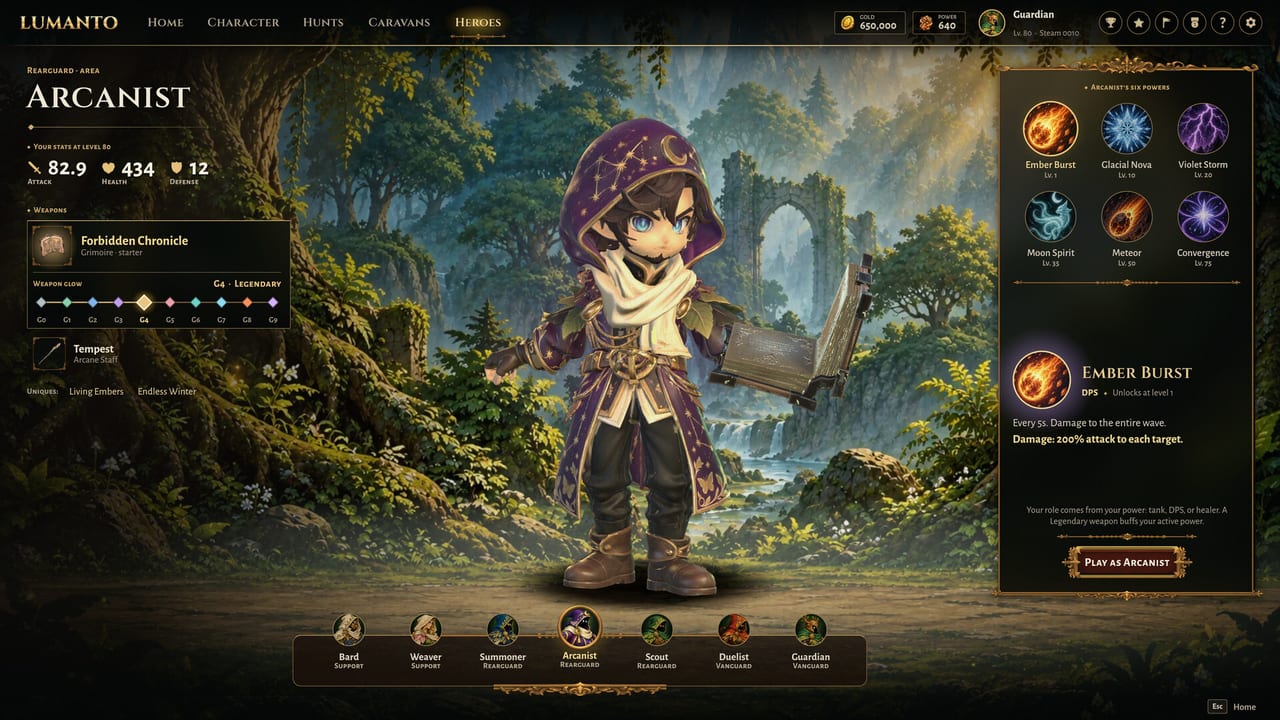
Your build in Lumanto is officially in your hands: a talent tree that grows with you, gear, gems, and the Workshop. Steam describes the tree as branches to choose, paths that change how each hero plays, and new choices that open at high levels. This guide turns that published frame into a practical build mindset—without inventing node names, percentage values, or fake skill ranks the studio never listed.
Pair talent planning with Gear & Workshop Guide for the ten-slot / Common-to-Nebular craft loop, Seven Heroes for kit identity, and Heroes Tier List for mode-leaning opinions. Idle pressure comes from Caravan Idle Guide; closed-game trio bosses from Hunts & Seals Guide; survival nights from Vigil Survival Guide; card fights from Dungeon Beta Guide. New accounts should finish Getting Started before deep respec experiments.
What the talent tree is (and is not)
It is: long-term passive direction for a hero. Branches and paths reshape how that hero’s published fantasy feels in caravan waves, hunt trios, Vigil nights, and dungeon parties. High levels unlock further choices, so early picks are not the whole story.
It is not: a paid power shop. Official economy copy is clear—no loot boxes, and nothing that makes you stronger is sold. Talent progress is earned by playing. It also is not a substitute for empty gear slots; a clever path with nine missing pieces still loses area bosses.
Treat the tree as one pillar beside gear grades, fourteen weapon families, gems, sets, sockets, and Workshop actions (combine, reroll, break to essence, fuse gems).
Build pillars that must stay aligned
- Talent path — The direction you commit to as levels open new branches.
- Hero identity — Guardian soak, Scout marks, Arcanist AoE, Weaver shields, Summoner fireflies, Bard tempo, Duelist counters.
- Gear + weapon family — Ten slots climbing toward Nebular along a family that matches the kit.
- Gems and sets — Socket plans and set bonuses (Weaver’s heal-to-shield set is the clearest official example).
- Creatures — Partners and elemental coverage that fight beside the hero.
- Mode goal — Caravan clear speed, hunt boss burst, Vigil survival score, or dungeon deck synergy.
When one pillar races ahead of the others, you feel “soft stuck.” Example: high talent investment into greed damage while Vigil nights and hunt seals demand sustain you never socketed.
Respec mindset without invented nodes
Studios rarely freeze every talent forever. Plan as if you may reallocate when seasons rotate or when a high-level branch finally opens:
- Commit early to a fantasy, not a meme spreadsheet. Pick the path that reinforces the Steam kit you actually enjoy opening daily.
- Leave mental budget for high-level unlocks. Official copy promises new choices later—do not assume your level-ten shape is final.
- Respec when the mode mix changes. A caravan-first week and a dungeon-beta week can want different leans on the same hero.
- Never invent node names in notes you share. Stick to role language (sustain, clear, control, counter) so advice stays honest when UI labels differ.
If the client offers a respec or reset flow, use it after you have materials and a written goal—not mid-panic after one wipe.
Per-hero lean across modes
Use published identities as compasses. Exact branch labels live in-game; the lean below is how those kits map to modes.
Guardian
Front line that takes the hits. Caravan / hunts: safer unattended clears and seal bosses that punish deaths. Vigil: soak maps to more days survived. Dungeon: pairs naturally with Guard marking a hero. Talent lean: durability and party enablement over pure selfish DPS.
Scout
Ranged shots and marks that expose the target. Caravan: strong default clear identity. Hunts: focus-fire area bosses after seals. Vigil / dungeon: priority targets and elites. Talent lean: mark uptime and consistent ranged pressure; add safety nodes if glass profiles keep dropping.
Arcanist
Area magic, frost, and spirits. Caravan / hunt arenas: packed waves love AoE. Vigil: soft control helps when you only steer movement. Dungeon: useful when adds or hazards punish single-target tunnel vision. Talent lean: wave clear and zone pressure; keep a plan for pure single-target bosses.
Weaver
Heals the party; with her set, extra healing turns into shields. Caravan: sometimes underrated for raw speed. Vigil / dungeon / stream parties: sustain specialist. Talent lean: amplify heal and shield conversion, then socket the set that completes the fantasy—see Workshop guidance.
Summoner
A swarm of fireflies. Caravan / hunts: parallel damage while AFK. Synergy vibe with creature collecting. Dungeon: value can feel provisional until you see how swarms meet turn rules. Talent lean: swarm uptime and companion strength; pair with a tougher twin hero for hard Vigil maps.
Bard
Slows and stuns while speeding up everyone’s powers. Solo early caravan: lower priority than a selfish DPS. Dungeon five-hero / stream caravans: force multiplier. Vigil: control creates breathing room. Talent lean: tempo and crowd control that scale with allies present.
Duelist
Dodges heavy blows and strikes back. Vigil / dungeon bosses: telegraphed pain windows. Caravan: safer than pure glass, potentially slower than dedicated AoE on trash. Talent lean: counter windows and spike defense that still deals damage.
For unlock order and deeper roster notes, stay on Seven Heroes. For shifting community rankings by mode, use Heroes Tier List.
Syncing talents with gear, gems, and Workshop
Talents multiply what you equip; they do not replace grades.
- Fill all ten slots before obsessing over one Nebular vanity piece.
- Choose a weapon family that survives a four-week season, then socket gems that reinforce the same lean as your talent path.
- Complete sets when the bonus matches identity (Weaver shield conversion is the published poster child).
- Run Workshop triage after emptying hunt banks or long caravan stretches so talent respecs and craft spikes happen with full materials—Gear & Workshop.
If dungeon decks want different stats than idle clears, keep a noted “dungeon kit” versus “hunt kit” rather than thrashing the tree every night.
Mode checklist before you spend points
| Mode | Ask before investing |
|---|---|
| Caravan | Will this path keep waves stable while the app stays open? |
| Hunts | Does the trio survive area bosses after seals, or only farm trash? |
| Vigil | Am I building for score survival knowing there is no loot? |
| Dungeon / PvP beta | Do talents support cards, Ace/Guard roles, or a twelve-card deck plan? |
| Seasons | Will this path finish daily/weekly orders on the twenty-four-step track? |
Four-week seasons, three daily orders, a weekly challenge, Stream Colossus, and milestone chests all reward consistency. Re-read talent tooltips when a season theme shifts what orders ask for.
Common build mistakes
- Copying a path that ignores your hero’s Steam kit fantasy.
- Maxing greed damage while hunt seals fail from deaths.
- Treating Vigil talent experiments as farming—Vigil still grants no items, gold, or XP.
- Respeccing every wipe instead of fixing empty gear slots first.
- Inventing community node names that are not in the client.
- Ignoring high-level branch unlocks and locking a forever plan at low level.
Related reading
- Gear & Workshop — grades, gems, craft loop
- Seven Heroes — roster identities
- Heroes Tier List — mode-leaning rankings
- Caravan Idle — open-app idle pressure
- Hunts & Seals — trio banks, seals, area bosses
- Vigil Survival — score nights, no loot
- Dungeon Beta — cards, Ace, Guard, PvP decks
- Getting Started — first-hour habits
Grow the tree with the hero you will actually play, align branches with gear and gems, and reopen high-level choices when seasons ask for a new lean. That is how Lumanto builds stay honest to the Steam systems.
Frequently Asked Questions
Quick answers about Lumanto systems, heroes, and progression.
What does Steam say about the Lumanto talent tree?
It grows with you: branches to choose, paths that change how each hero plays, and new choices that open at high levels—alongside gear, gems, and the Workshop.
Should I finish the talent tree before upgrading gear?
No. Align talents with ten gear slots, grades toward Nebular, gems, and sets. Empty slots usually hurt hunt bosses more than a missing late branch.
Do all seven heroes share the same build systems?
Yes. Talent trees, ten slots, ten grades, gems, sets, and Workshop actions apply across Guardian, Scout, Arcanist, Weaver, Summoner, Bard, and Duelist.
Should Vigil decide my talent path?
Only if leaderboards are your goal. Vigil gives no items, gold, or XP—so a Vigil-only tree can starve caravan and hunt power if that is your main progress.
When should I respec?
When your mode mix or season orders change, or when high-level branches open a better path. Fix gear gaps first; do not invent node names when planning.